Got it. What's Next?

Category: Performance

Goal Alignment vs Compromise

There is a difference between compromise and goal alignment, and the older I get, the more I notice how often people confuse the two. I first came across the idea while reading about goal alignment in the book, “Beyond High Performance” although at this point I honestly cannot remember whether the exact distinction came from the book itself or from the argument my brain started having with the book afterward.

Compromise is usually presented as one of the great virtues of adulthood. You want one thing, I want another, and somewhere in the middle we agree to accept a slightly less satisfying version of both. We each get to eat, but somehow end up at Applebee’s.

That system works reasonably well. Civilization probably collapses within 72 hours without compromise. Shared bathrooms alone would bring society to its knees.

Still, compromise has always seemed a little overrated because both people are by definition giving something up. The entire framework starts from the assumption that satisfaction is a zero sum game, so the best outcome available is minimal mutual reduction.

Goal alignment feels fundamentally different. It’s what happens when two people stop arguing about positions and start identifying the deeper outcome they are both trying to create. Once that shift happens, the conversation changes from “What am I willing to sacrifice?” to “Is there a version where both of us gain something we did not previously have?”

That distinction shows up constantly in parenting, relationships, and work. I think about conflicts between Bryson and me at bedtime. He thinks the conflict is about “My body, my choice.” I think it’s about him needing to listen to dad. Traditional compromise becomes something transactional. “Fine, 10 more minutes.” Nobody feels understood. And we just kick the can down the road another 10 minutes.

Goal alignment asks a different question. I want consistency and rest for Bryson so he is at his best tomorrow. He wants participation and ownership in the decision since he quite literally has almost no choices in anything else during the day. Suddenly the discussion is no longer entirely about the clock. How do we reach a method where he feels part of a process that will make him his best tomorrow? So maybe Bryson chooses the books, the music, or the order of the routine. I get agreement from him that sleep is good for him. He gains agency, I gain relief.

The same thing happens at work. People tend to work harder when their personal goals and the organization’s goals stop feeling like opposing forces. That does not mean every conflict has a magical win-win solution. Some disagreements are real. Some goals genuinely collide. But a surprising number of arguments persist simply because people become attached to methods instead of outcomes.

There’s a famous line that goes something like, “If you want to build a ship, don’t drum up people to collect wood, teach them to want to take a ride on the sea.” That idea feels connected to goal alignment. People become energized when they feel connected to a shared destination instead of trapped inside a negotiated surrender.

Compromise often focuses on minimizing loss. Goal alignment focuses on expanding possibility. Those are very different problems. And occasionally, solving the second one leaves both people with more than they started with.

When You Have Too Much to Do, Stop and Do Less

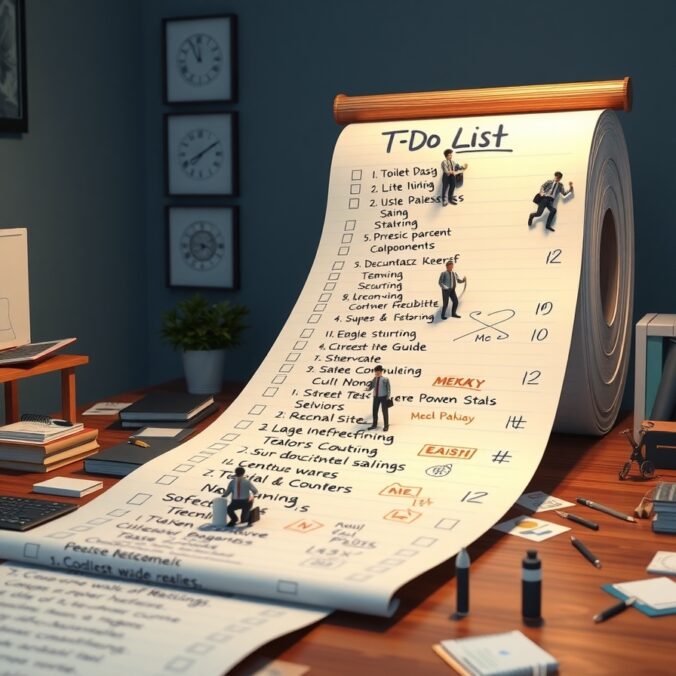
Eventually, the list gets away from you.

You sit down ready to work, but nothing moves. Your brain stalls. You’re not even procrastinating. You’re just stuck. The list looks like a mountain, and instead of climbing it, you stare at it, waiting for something to change.

The anxiety and stress don’t come from the list itself. They come from the pressure we put on ourselves to catch up. That pressure builds, and the spiral begins.

Continue reading

The Caffeine Purge Begins

I drink a lot of coffee. Usually a full pot by the end of the day, and sometimes I throw in three or four Cascade Ice caffeine drinks just to round things out. It’s not that I think I need that much. It’s just what I do. Part habit, part coping mechanism.

But I’ve been feeling the effects lately and I don’t like them. Anxiety, restless sleep, a sense that my nervous system is running slightly off the rails even when nothing’s happening. So I’ve decided to do something about it. Not some dramatic life overhaul. Just one thing: cut back on caffeine with the goal of a total abstinence. Seven to ten days of tapering. Let’s see what happens.

The plan is to mix decaf into my coffee grounds, tart with half and half, then taper it down. That will remove about 1/3 and gives me a few days to fool myself before things get more difficult. Next, drop the Cascade Ice drinks and try to replace them with pure water and electrolytes. That’s 1/2 of the current state so 2/3 total.

Then, it’ll just be cutting down the pot to 1/2, then one cup, then none at all. Sounds easy. I mean, I’ve done much harder things.

Why now? Because I want better sleep. Less edge. More clarity. And I want to see what my face and gut look like without all the hidden water retention and stimulant drag. Ten days without caffeine should be enough to know whether any of that’s real or just a theory I invented while over-caffeinated.

So this is Day 1. No big declarations. Just an experiment. I’ll check back in if things get interesting.

Your 2% Battery: When Real Work Starts

I’ve noticed something. Most of the real progress in life doesn’t happen when you’re rested, focused, and firing on all cylinders. It usually shows up when you’re barely hanging on. When your brain is foggy, your patience is shot, and everything on your to-do list sounds equally annoying. At least that’s how it is for me.

It’s when the old stories come in. The ones that say, “Screw it, let’s just do this tomorrow” or “This probably isn’t worth it anyway.” And if I can manage to ignore that voice for five minutes and just do the thing, even halfway, it changes something deeper than the task itself.

I’ve also seen this in fellow friends, athletes, and especially parents. We’re not struggling because we don’t know what to do. We’re struggling because we’ve convinced ourselves that it only counts if it’s done perfectly, at the perfect time, with perfect energy. That’s garbage.

Read more: Your 2% Battery: When Real Work Starts

Sometimes being a dad means cleaning up a mess you already cleaned yesterday. Or setting up an obstacle course in the yard after a long day when you’d rather just lie down, stare at the ceiling and hand parenthood over to the TV. But we do it anyway, because consistency matters more than inspiration.

Lately I’ve been thinking about that in terms of performance. Not just fitness or business, but the mental side. The part where we’re in the batter’s box and don’t swing, because it’s not the right pitch yet. The discipline isn’t in the swing. It’s in the stillness. It’s in trusting that the next one might be the right one.

So as I was thinking about what to do with this site as I bring it back to life in a world where no one blogs anymore, I think I’ll use it as an excuse to keep leaning into that space. How to stay focused when my brain wants a nap.

I might talk about AI. Or parenting. Or playing softball on a sore calf because it feels good to compete again. It’s all part of the same thread. Eventually, it might have an actual point, but for now, this is just about building the muscle to keep going when the battery light comes on.


A Modified Pomodoro Hack for Procrastination

I hate stressing about the easy things I haven’t done because I “don’t have the time.” I know that’s nonsense. I have the 10-20 minutes it will take. I need to momentum and confidence that I can get in and out in those 20 minutes, and not go to bed 2 hours later instead. So I’ve been trying this.

I took the standard Pomodoro technique which is 25 minutes on, 5 minutes off.

My version for the short sprint:

  • 20-minute timer, but I’m usually done faster,.
  • Something random from Spotify Music I’ve never heard before (no lyrics).
  • One task. One browser tab, no email, no pretending.

At the end, I don’t just take a break. I’ll do one physical movement. Walk in the yard, do a few pushups, stretch, whatever. It breaks the trance and resets the brain. Plus, my mind is focused now that one middling thing is done.

Two Minute Exercises To Keep You In Shape During COVID

The gym is closed, you don’t want to run at Greenlake, and your soccer season is canceled. How are we all going to stay in shape?

For some people, a routine and discipline are the keys to exercise. So when every day is Tuesday and every hour is 1:00pm, how do you accomplish that discipline? How do you make that routine happen?

I surveyed a few friends, and here are some ideas we’ve come up with. All of them take two minutes or less, and by the end of the day, you’ll have completed a decent amount of calorie burning.

  1. TV Pushups: We’re going to be streaming more shows, especially until the weather turns around. So before every show, throw down 10-20 pushups. The more TV you watch, the more pushups you do.
  2. Old school Jumping Jacks: Yeah, it’s cheesy. But two minutes of jumping jacks will make you feel like you earned that episode of Ozarks.
  3. The Jump Rope: It was your favorite exercise toy as an eight-year-old. 2:00 as an adult will have you breathing hard.
  4. Walking Stairs: We may not own Stairmasters, but we do have staircases in our house. Take two minutes a few times a day and walk up and down the stairs 10 times. See if you can get to 50 flights a day.
  5. Sprinting Streets: Greenlake and Burke-Gilman can get crowded. But we don’t need long trails for sprints. Measure out 100 yards in front of your house and do a few sprints a day. Sprint up, walk back. It’ll take mere minutes and get your heart rate up.
  6. Chin-up bars: Cheap, easy to set up, and super effective. Don’t be discouraged the first time you try it.
  7. YouTube Yoga: You can find a lot of exercise content online – even short stretching and yoga exercises. Stay flexible my friends.
  8. The Massage Gun: Not everyone agrees in their benefits, but for a relatively small price (especially considering we don’t have gym membership dues), we like Massage Guns for loosening up muscles. I don’t have an Amazon Affiliate account or anything, so you can read about them on CNN.

You probably have your own ideas. Send me an email and share them, or just ping me on Twitter. Stay healthy everyone.

© 2026 Andy Boyer

Theme by Anders NorenUp ↑