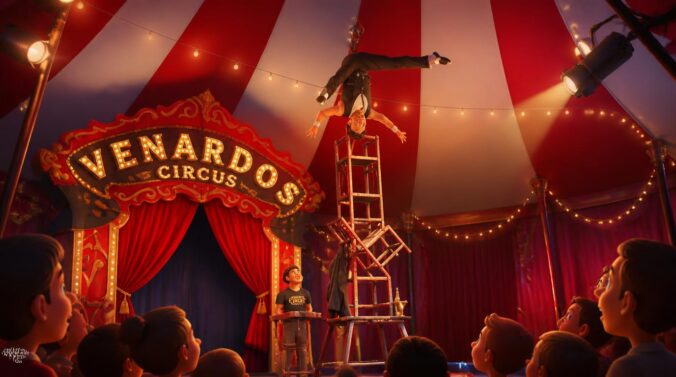
If the Savannah Bananas had a baby cousin in the circus business, it might be Venardos Circus.
The Bananas took baseball, an institution with more than a century of tradition, and figured out how to make the entire experience more entertaining. Venardos has done something similar with the traditional circus. It has the acrobats, aerialists, juggling and comedy you’d expect, but packages everything into a smaller, more personal experience. Think Broadway meets the big top, without the Broadway ticket prices.
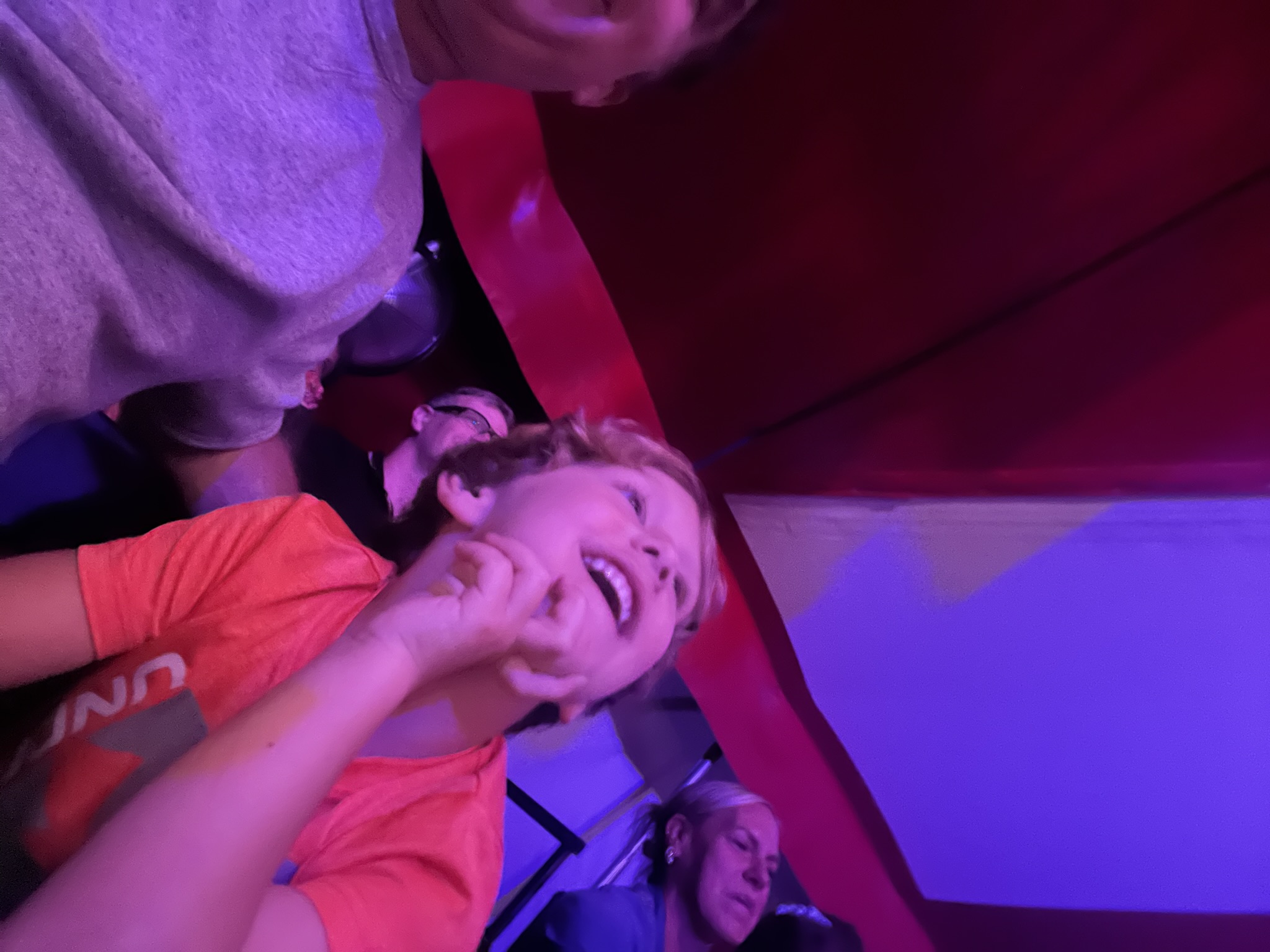
I recently took my five-year-old son to see Venardos Circus in Snohomish, Washington. He’d never been to a circus before, and I’d never been to one quite like this.
A Circus in Your Own Backyard
Venardos isn’t trying to fill large arenas in major cities. Instead, the company brings its traveling circus to smaller communities, setting up its big top in places where families already gather.
In Snohomish, the circus sets up at a local venue that hosts soccer, arts events, pumpkin patches and summer festivals. People who might not make the drive into Seattle to see a major circus at Climate Pledge Arena will happily drive a few miles to see one in their own community.
Walking into the tent feels like stepping into an old-fashioned traveling circus. There’s hay on the ground, and the bleachers form a rough U around the performance area. Maybe four rows of seats along the sides and six rows of rising bleachers across the front. I’d guess the whole place holds 300 to 400 people, so there’s really not a bad seat in the house.
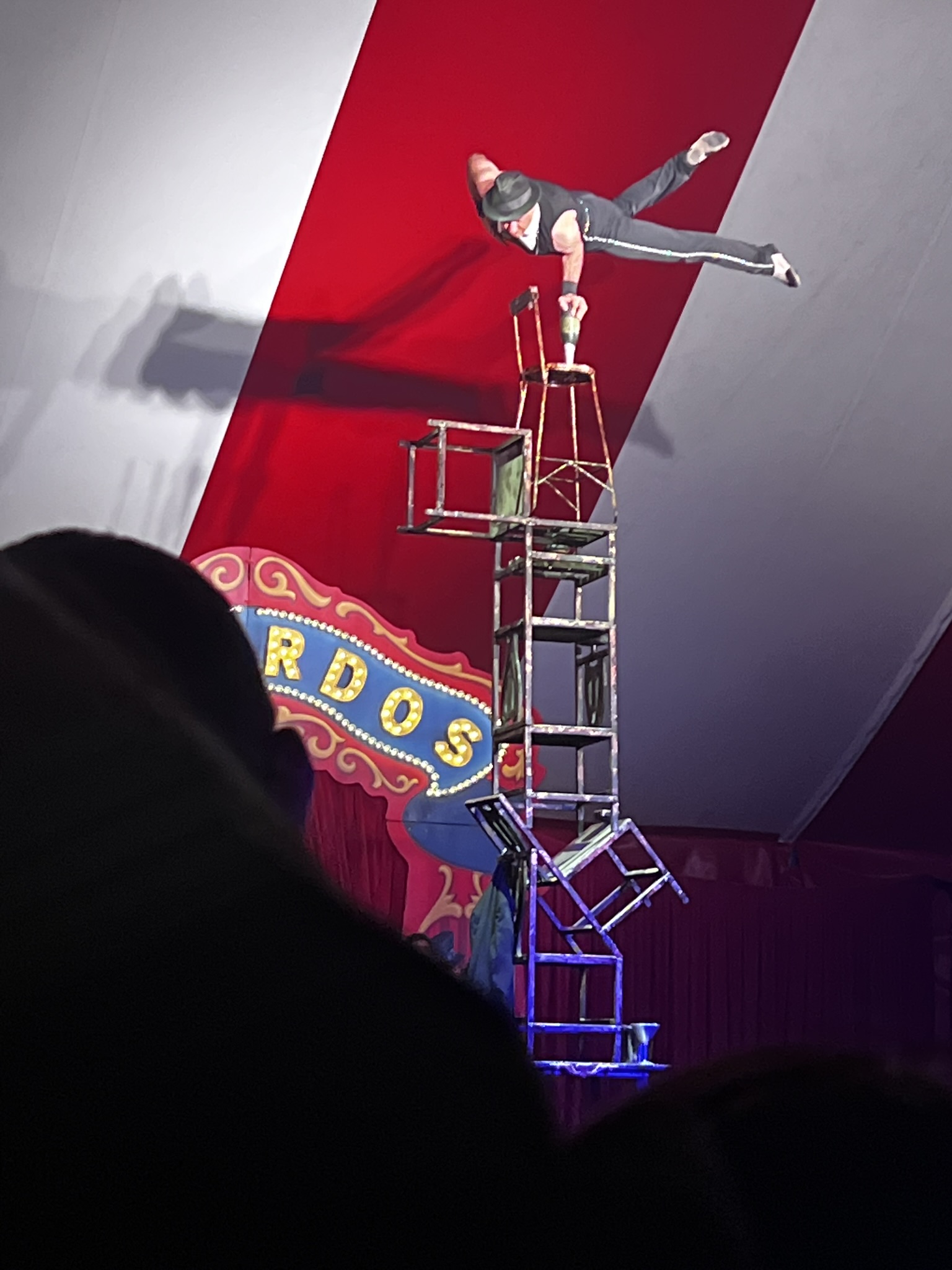
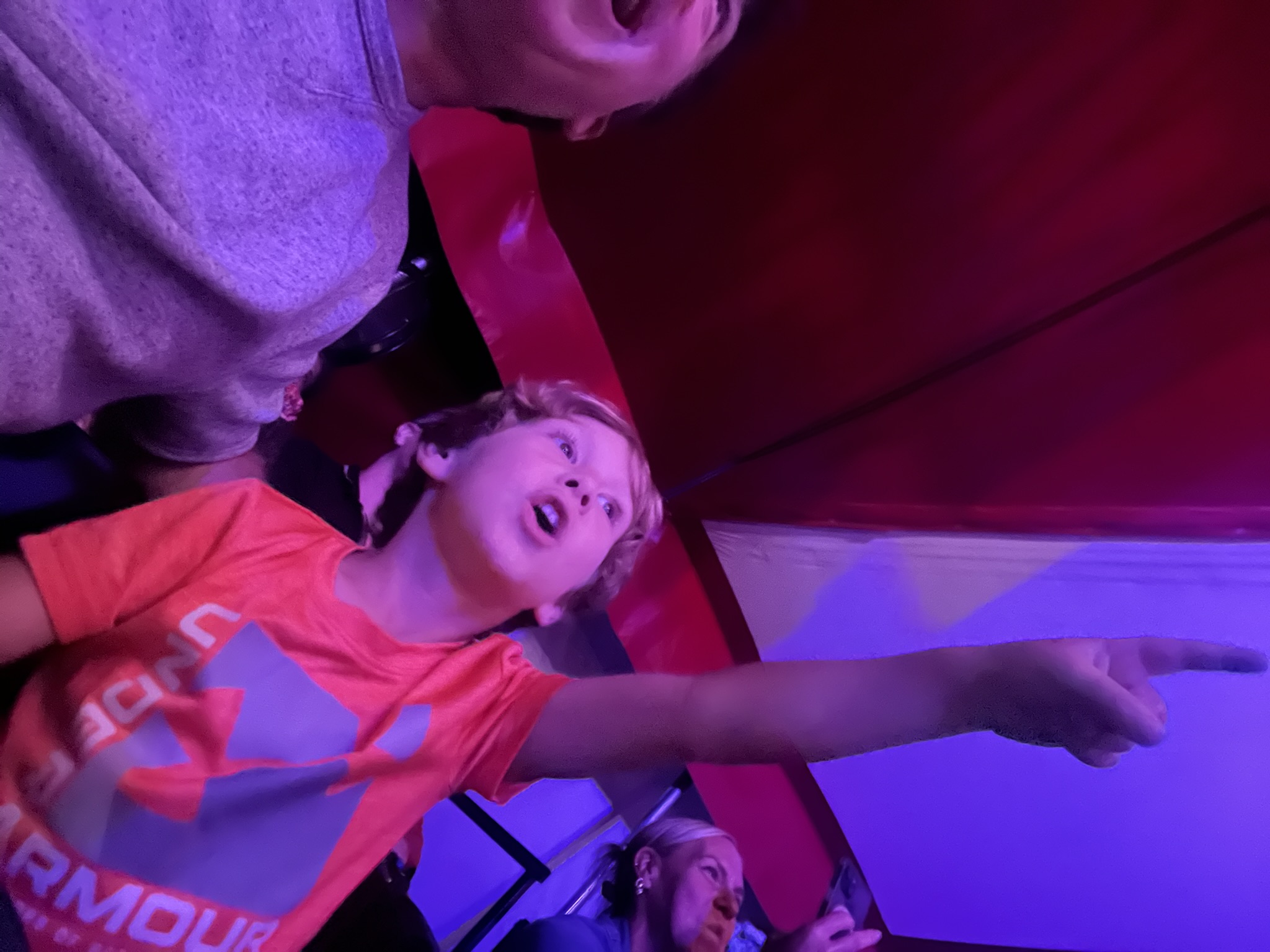
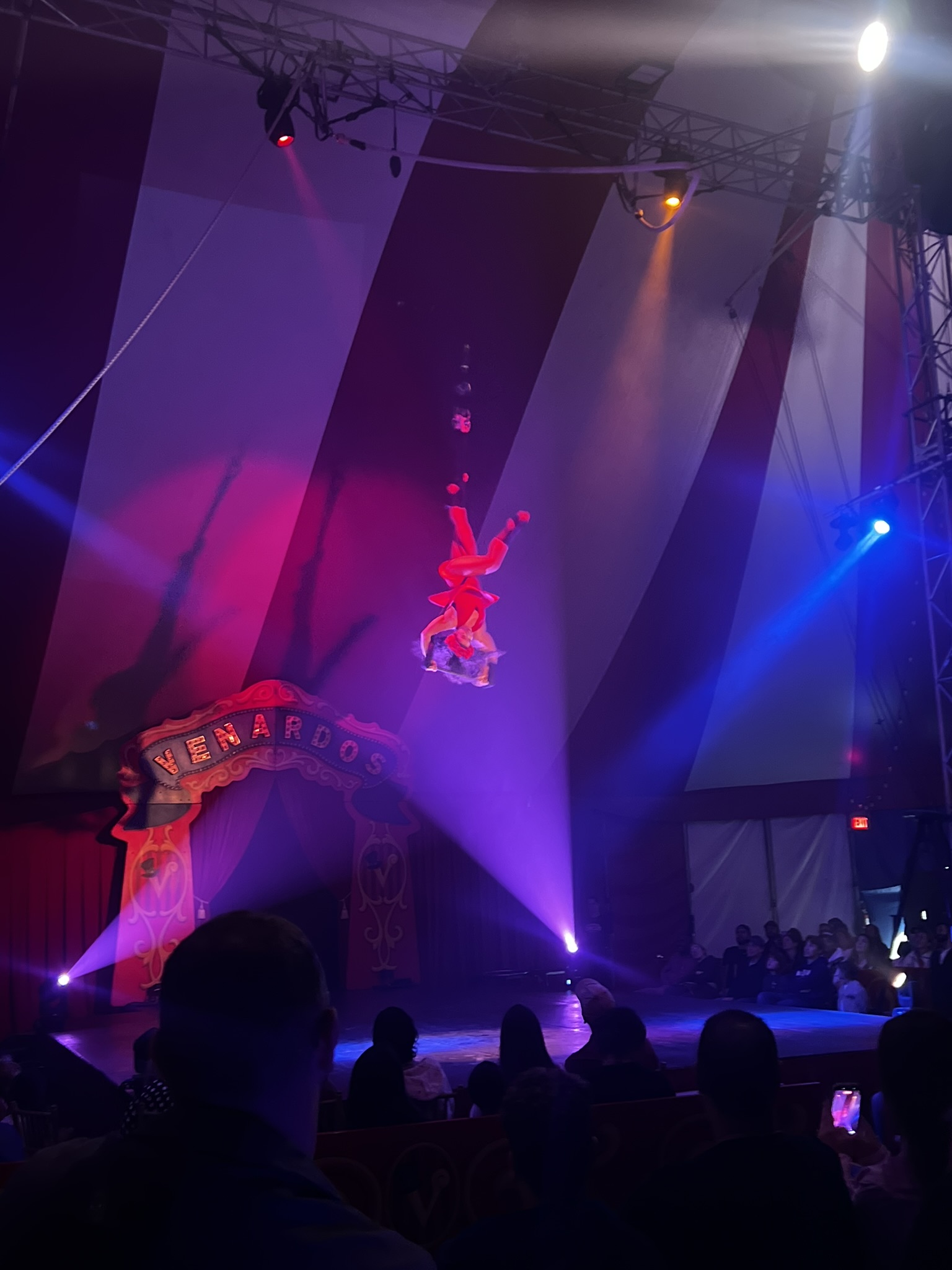
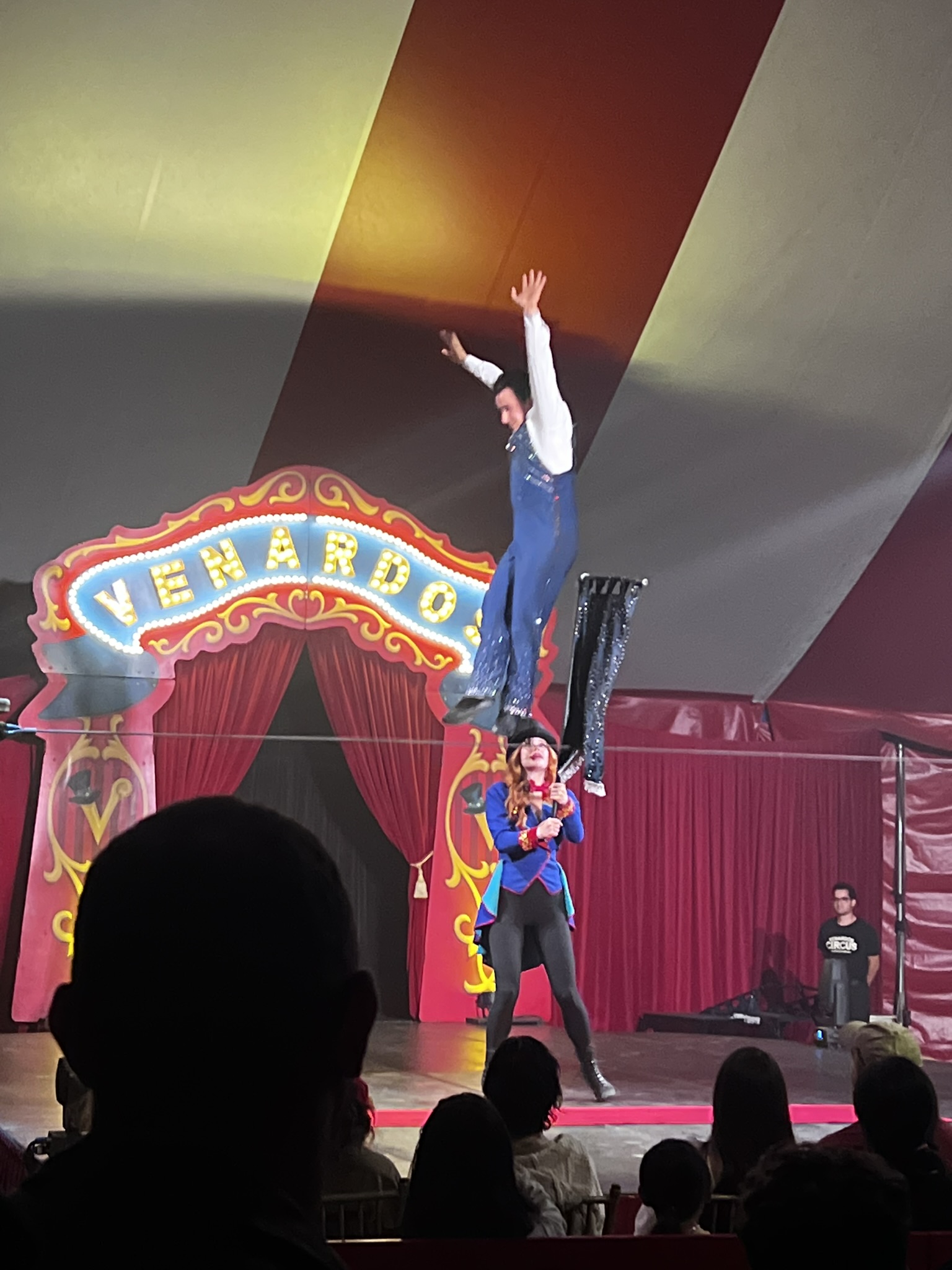
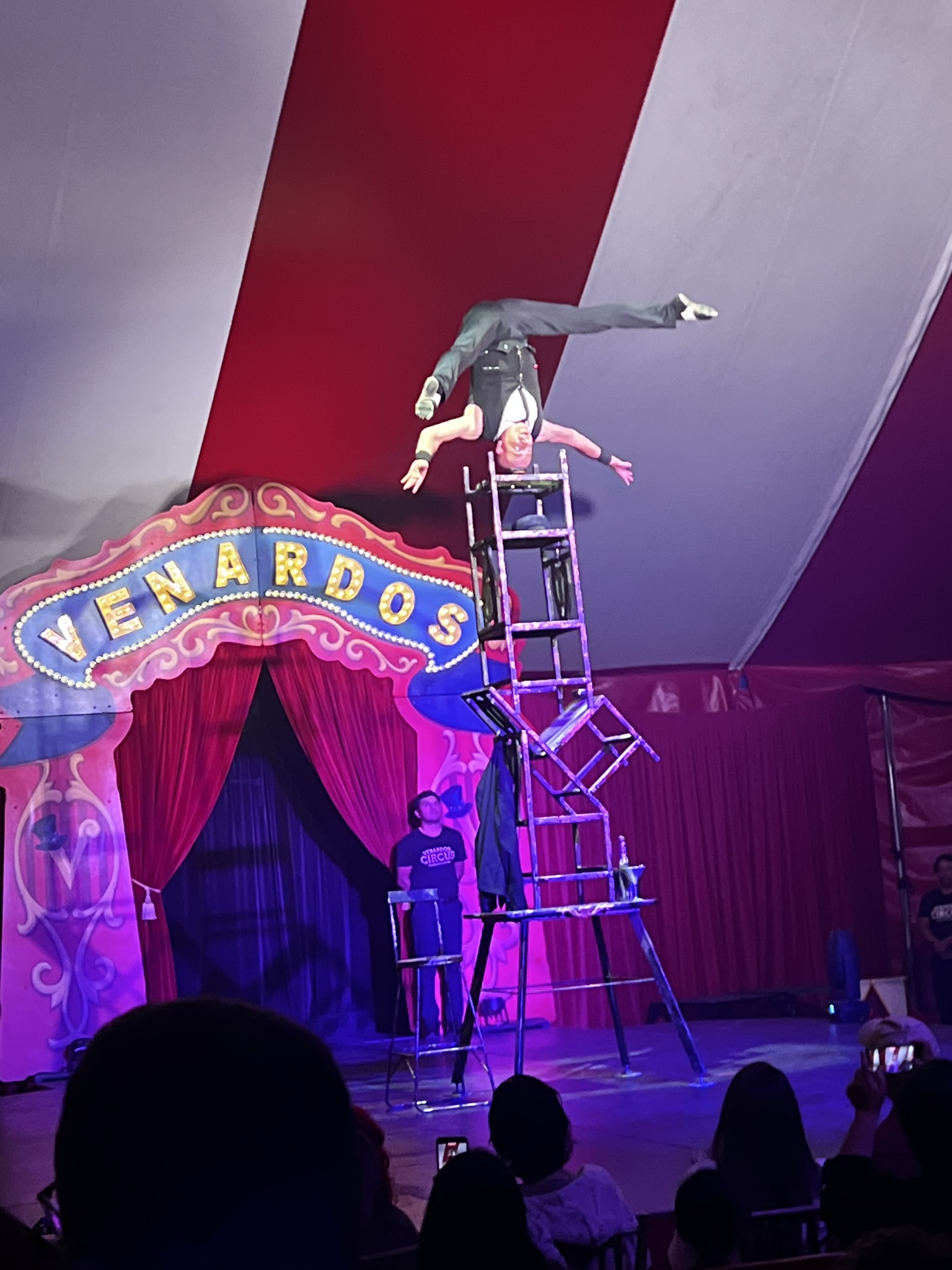
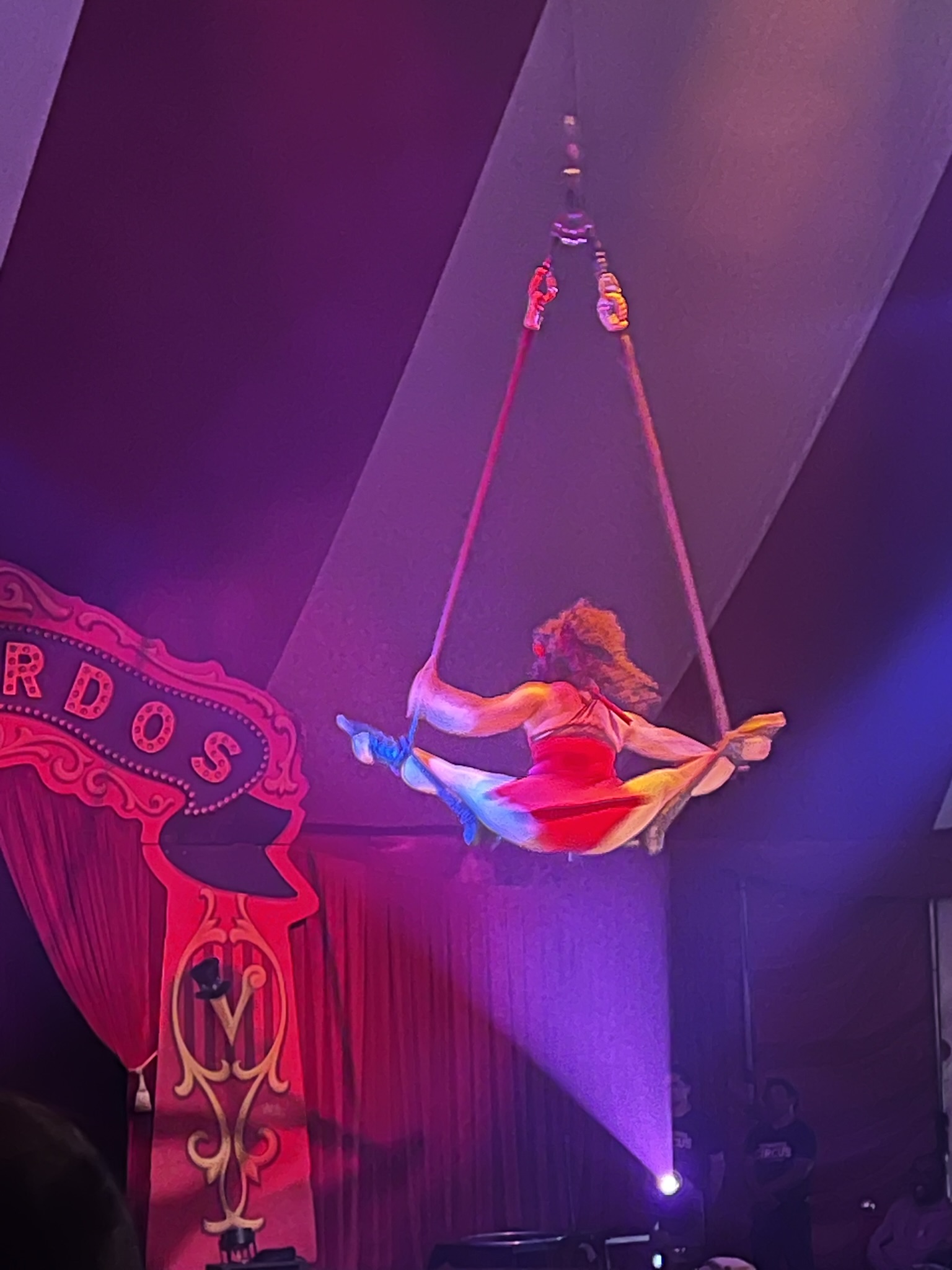
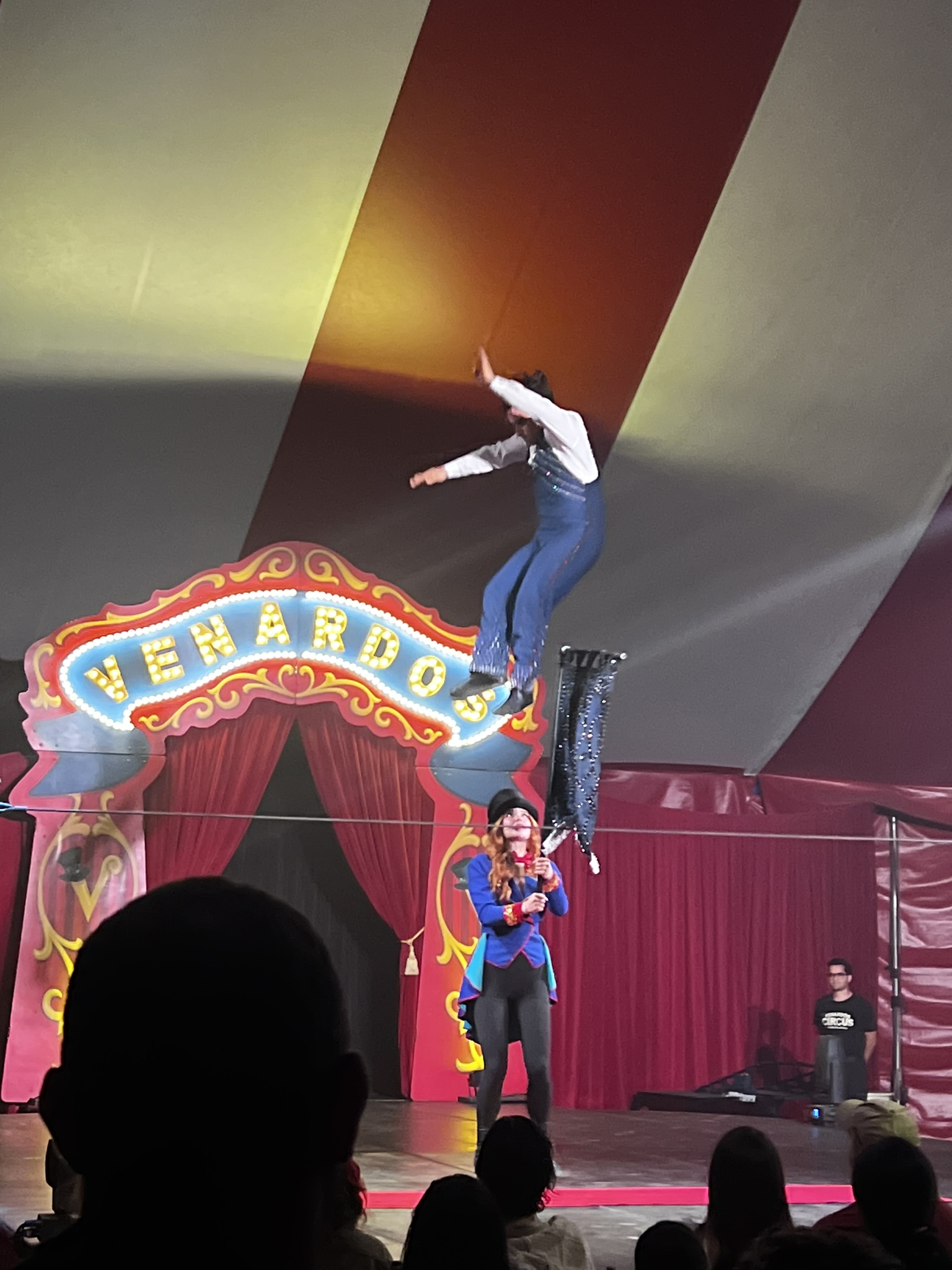
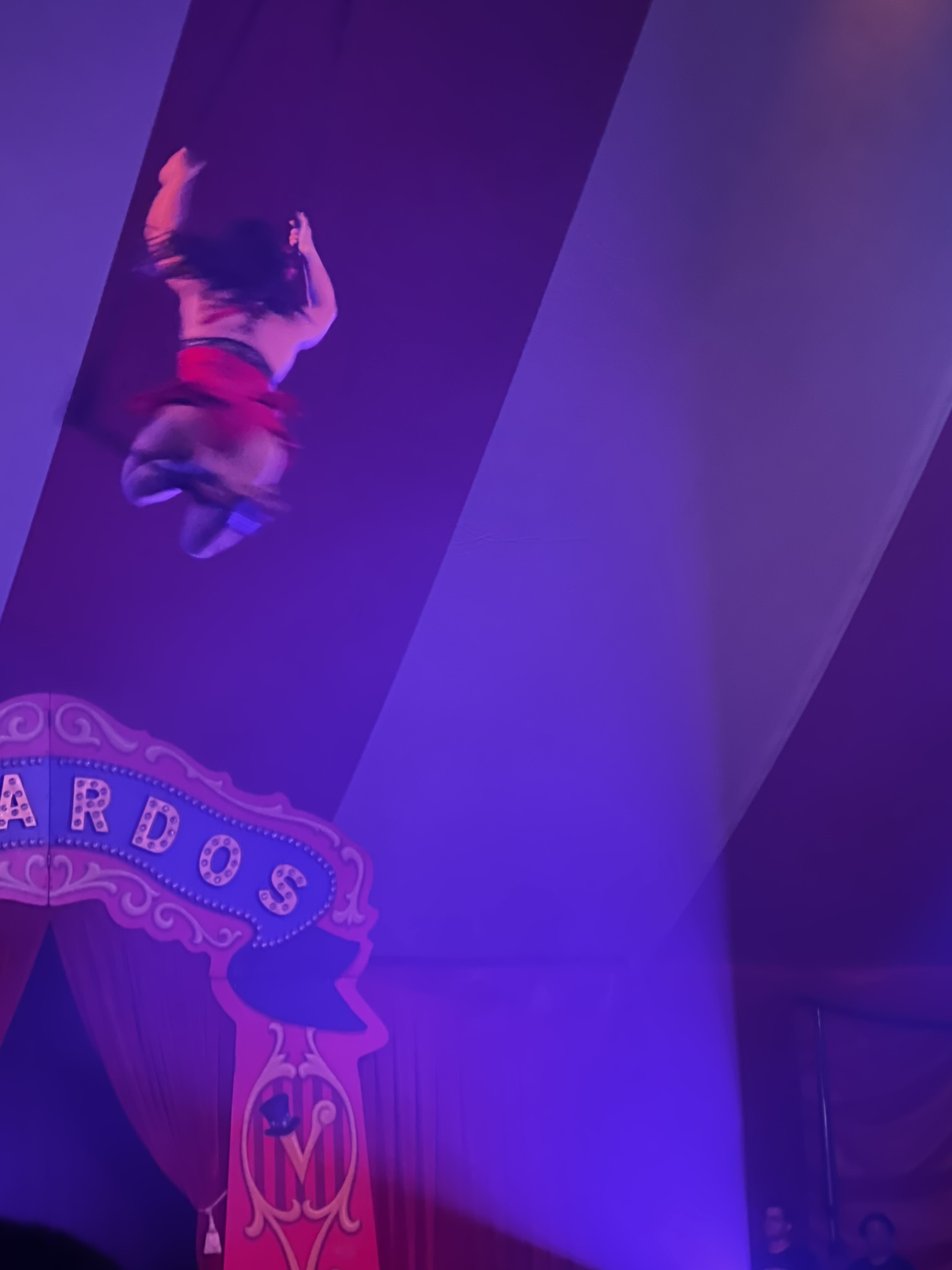
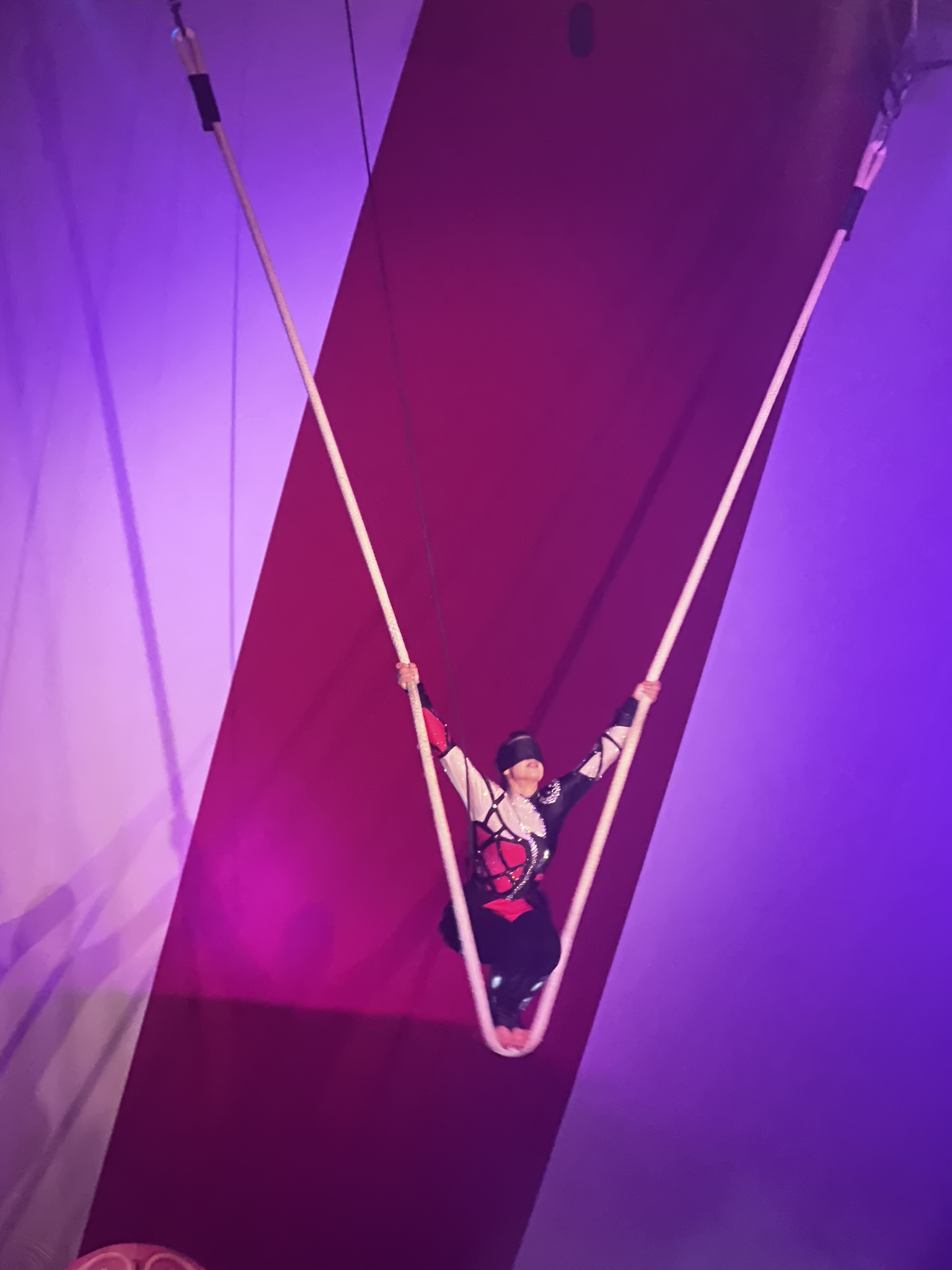
The performance area itself is about the size of a high school stage, with enough room for one act at a time. But look up, and the tent seems to rise a hundred feet overhead, giving the aerial performers plenty of room to do their thing.
My son had certainly never seen someone balancing on a chair 50 feet in the air, doing flips on a high wire, or whatever that woman was doing with the rings. I wasn’t entirely sure what to call some of the acts myself, but we both had a great time watching them.
From Six People to Two Touring Circuses
Kevin Venardos spent five years as a ringmaster for Ringling Bros. before deciding to start his own circus in 2014. His first production featured six people performing at the Los Angeles County Fair. By 2016, the operation was still pretty modest, with a tiny tent, a wooden performance ring and hay bales for seating. I’m guessing the concessions weren’t exactly a major revenue source.
But the idea worked. By 2018, Venardos was operating a five-stop, ten-week tour. A year later, that had expanded to 22 locations over 45 weeks.
Then came COVID. Like virtually every other live entertainment company, Venardos suddenly found itself without an audience. The company developed virtual performances, including private livestreams commissioned by Google, and eventually returned to extended touring in 2021.
By its tenth anniversary in 2024, Venardos was performing under a custom-built Italian big top. In 2025, the company expanded to two separate touring productions, named Andi and Billie after Kevin’s daughters.
Not bad for an operation that started with six people and some hay bales.
Everybody Has a Job
One of my favorite moments came during intermission when my son and I went to buy snacks. We grabbed some cotton candy, walked up to the cash register, and I looked at the guy behind the counter.
“Weren’t you just out there on the low wire doing flips?”
He nodded yes.
Then I thought about it. The woman who had shown us to our seats earlier was also the ringmaster. Apparently, when you’re running a small circus, everybody has a few jobs. It’s a genuine all-hands-on-deck operation. I suppose when your payroll is relatively small, you can’t afford to have your acrobats sitting around during intermission.
At the end of the show, Kevin Venardos himself came out to thank the audience for coming. It doesn’t get much more personable than that.
The Savannah Bananas Connection
The comparison isn’t about size. The Bananas are now performing in major stadiums, while Venardos maintains a smaller, more personal atmosphere. But there are some interesting similarities in how the two companies approach entertainment.
Both founders came from established industries. Jesse Cole worked in baseball management before launching the Bananas, while Kevin Venardos had spent years working for Ringling Bros. Both understood their respective businesses well enough to recognize opportunities to do things differently.
The Bananas introduced dancing players, unusual rules and constant audience interaction. Venardos combined traditional circus acts with theatrical storytelling, original music and an interactive preshow where families can meet performers. In both cases, the experience extends beyond the main event.
Interestingly, Venardos Circus actually predates the Savannah Bananas by two years. Kevin launched his circus in 2014, while the Bananas debuted in 2016. So this isn’t a story about one company copying another. It’s about two entrepreneurs independently finding ways to make familiar entertainment more interesting.
Their business models are different, too. Venardos doesn’t need a 20,000-seat arena. Consider the potential economics of a smaller venue. At 400 people paying $60 per ticket, a sold-out performance generates $24,000. Two or three shows a day, four days a week, could theoretically generate $192,000 to $288,000 in weekly gross ticket revenue.
Of course, that’s before paying the performers, transporting the equipment, renting the property and covering the considerable expense of operating a traveling circus. Actual attendance, ticket prices and performance schedules will vary. But it illustrates why bringing a relatively small production to a series of communities can be an attractive business model.
A Pretty Good Business Lesson
What I like about the Venardos story is that Kevin didn’t invent the circus. He took something people already enjoyed and created his own version of it. He started small, found an audience, survived a pandemic and eventually expanded into two touring companies.
The Savannah Bananas may have the bigger crowds and louder social media presence, but Venardos has built a business around a different kind of experience. There’s no need for a 20,000-seat arena when a few hundred people can have a great time in a tent on a farm.
The lesson, at least to me, is that bigger doesn’t necessarily mean better. It’s about finding the right audience, offering the right entertainment, bringing it to the right place and charging a price people are happy to pay.
My son got his first circus experience, I got to watch a guy do flips on a wire and then sell me cotton candy, and Venardos got a couple more happy customers.
That’s a pretty good business model.